


Reimagining: When Old Pieces Learn New Tricks
As TheUrbanative approaches its tenth year, we have been returning to our archive with curiosity. Familiar pieces were revisited through colour, new materials and evolving craft techniques, revealing how even the smallest shift can open an entirely new chapter in a design’s story.
Reimagining connects the past, grounds the present and shapes the future. At least that is how things have been unfolding in the studio lately.
During this year's Cape Town Furniture Week, inside the Sisonke Gallery; we had the opportunity to do something we secretly love doing at TheUrbanative. We revisited our own work. Not to remake it exactly as it was, that would be far too predictable!
Instead we asked a simple question. What happens when we look again?
Working alongside MashT Design Studio and Hoven, the Totemic exhibition became a kind of playground for that idea. Familiar pieces from our archive were reintroduced with new colours, different materials and small shifts in detail. The funny thing about design is that even the smallest change can send a piece in a completely new direction.

A Little Colour Experiment
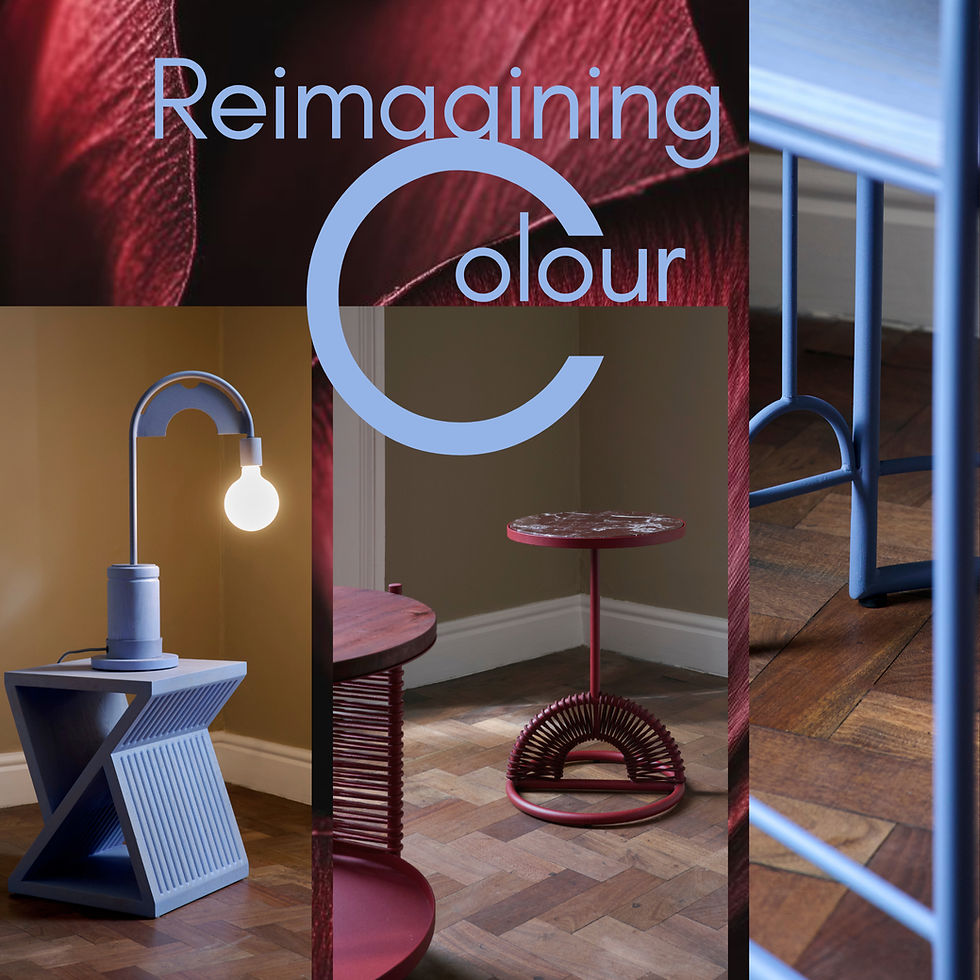
Colour quickly became one of the main characters in this story. Deep burgundy and pale blue began appearing across the pieces like two moods in conversation with each other.
Burgundy brought depth and drama while pale blue softened things and introduces a sense of calm.
When colour wraps around an entire form it does something interesting. The structure suddenly reads differently. The silhouette becomes more sculptural. The object begins to feel like a single body rather than a collection of parts.
Timber stains, colour matched powder coated steel, woven leather cords and cotton fringe all joined the dialogue. Each material brought its own personality and together they built a layered language of colour, texture and material exploration.
In other words, things got really interesting.
A Few Familiar Faces
As we approach ten years of TheUrbanative, returning to earlier pieces has become a surprisingly joyful exercise.
The first collection we launched back in 2016 was rooted in Ndebele inspiration and modernist silhouettes. Looking at those pieces now is a little like opening an old sketchbook. The ideas were still there and simply wanted to spread their wings a bit.
And with this, some pieces welcomed their glow up very happily...
The Lupita Accent Lamp is the art of looking back at the 2018 Lupita Floor Lamp from the African Crowns Collection. This piece has always been a quiet study in balance and negative space. In this Chroma version the solid ash base is stained in a pale blue, the powder coated steel was colour matched in our new colour Pidgeon Blue and even the electrical cord joined the party. Suddenly the lamp was playful and a bit mischievous.
The Fula Chair, inspired by the sculptural hairstyles of Fula women across West Africa, now appears in a Pigeon Blue colourway. The form stays beautifully organic while the colour and material treatment shifted the entire mood.
Then there is the Wambo Side Table, referencing the intricately plaited eembuvi hairstyles of the Mbalantu women of Namibia. It's story unfolded through layers of wine red tones, rosewood stained timber and colourmatched woven leather cord.
Monochromatic perhaps, but definitely not quiet.
Photography by Francis Marais
A Second Look at the Studio Archive
Some pieces invited us to look a little deeper into the studio’s earlier chapters.
The Zinhle Echo revisited the original Zinhle stool/side table first introduced in the 2015 Ndebele Collection. Originally crafted in bamboo, this new iteration carried the geometric spirit of the earlier piece while introducing CNC scalloped detailing that plays with rhythm, shadow and surface. Rendered in pale blue stained ash, the piece became both a continuation and a reflection of its earlier form.
The Muk'eti Woven Side Table, named after the Amharic word meaning warmth, also got a lil glow up through material layering. Originally conceived as a simple powder coated steel piece, this reimagined version introduces a marble top that adds visual and physical weight, tactility and contrast. The layered materials highlight our continued interest in balancing craft, structure and material expression.
Photography by Francis Marais
New Twists on Familiar Pieces
One of the newest additions to the collection is the Phondo Mirror, and this one feels particularly special because it marks our first timber mirror within the African Crowns Collection.
The name comes from the Nguni word phondo, referring to a horn or projection and often used to describe a ponytail or afro puff. That idea becomes the crown of the mirror itself. A ring of sculptural spheres rises around the frame, almost like hair gathered and lifted. Crafted from solid Kiaat and stained a deep rosewood tone, the mirror is finished with a brass plated scalloped edge and a soft cotton fringe that introduces movement and tactility.
It quietly celebrates African hair stories while exploring material in a new way.

Where Craft Sneaks In
Then there are the Tolek Candle Holders, companions to our Tolek candles created with Okra Candles for the Homecoming Collection. These pieces allowed us to explore wood turning, a craft technique we have recently started diving into more deeply in the studio. The rounded timber plinths are shaped on a lathe before meeting a powder coated steel cradle designed to hold the candles.
The forms draw inspiration from the rounded earthen huts of the Musgum people of Cameroon. Small objects perhaps, but full of story.
Texture also took centre stage in the evolution of the Wambo Ottoman, now reimagined as the Makgabe Ottoman. While the silhouette echoes the earlier pieces, the cascading fringe introduced a new cultural reference drawn from the Setswana Makgabe skirt. Traditionally worn by girls before transitioning into womanhood, the skirt’s layered leather strands symbolised modesty and cultural identity. In these pieces they become trailing fringe that adds movement, softness and a little drama to the form.
And then finally there is the Kganyo Light, a reimagining of the Khanyi Light from our 2017 Ndebele Collection. With its geometric silhouette, patterned upholstery and subtle brass details, the piece feels both architectural and warm.

Why Reimagining Matters
Looking at all these pieces together revealed something we perhaps knew all along. Design rarely moves in a straight line.
Sometimes the most interesting thing you can do is return to where you started, bring new tools and ask new questions.
Together these works invite the viewer to consider reimagining as a practice of attentiveness. Each object carries memory of its original form while opening space for new interpretations through colour, material and time.
As TheUrbanative approaches its tenth year, the archive has become less of a record and more of a conversation. It is not something we leave behind but something we return to with curiosity.
Reimagining, it turns out, is simply how the story keeps unfolding.


Comments